

Introduction
Traditional recipes often hold valuable lessons about nutrition, seasonality, and mindful cooking. One such beloved dessert in Indian cuisine is Gajar Halwa, a warm and comforting sweet dish enjoyed mostly during the winter season.
Made with fresh carrots, milk, ghee, and nuts, gajar halwa has been prepared in Indian households for generations. The dish is not only delicious but also reflects the cultural importance of using seasonal ingredients and natural cooking methods.
During winter, red carrots become widely available across India. These carrots are sweeter, juicier, and richer in nutrients compared to regular carrots. Because of this, they are perfect for making desserts like gajar halwa.
This article explores the nutritional benefits of carrots, the importance of traditional cooking ingredients, and a simple way to prepare this classic dessert at home.
Nutritional Benefits of Carrots
Carrots are one of the most nutrient-dense vegetables commonly used in daily cooking. Their bright orange or red color comes from beta-carotene, an antioxidant that the body converts into vitamin A.
Vitamin A plays an important role in maintaining healthy vision, supporting the immune system, and improving skin health.
Carrots also contain fiber, potassium, and vitamin C. These nutrients help improve digestion and support overall wellness.
Because of these benefits, carrots are often recommended as part of a balanced diet. When used in desserts like gajar halwa, they offer both taste and nutritional value.
Why Traditional Ingredients Matter
One of the reasons traditional recipes remain popular is their focus on simple and natural ingredients.
Unlike modern processed foods, traditional cooking relies on ingredients that are minimally processed and nutritionally rich.
Milk adds creaminess and provides calcium and protein. Nuts such as almonds and cashews contribute healthy fats and minerals.
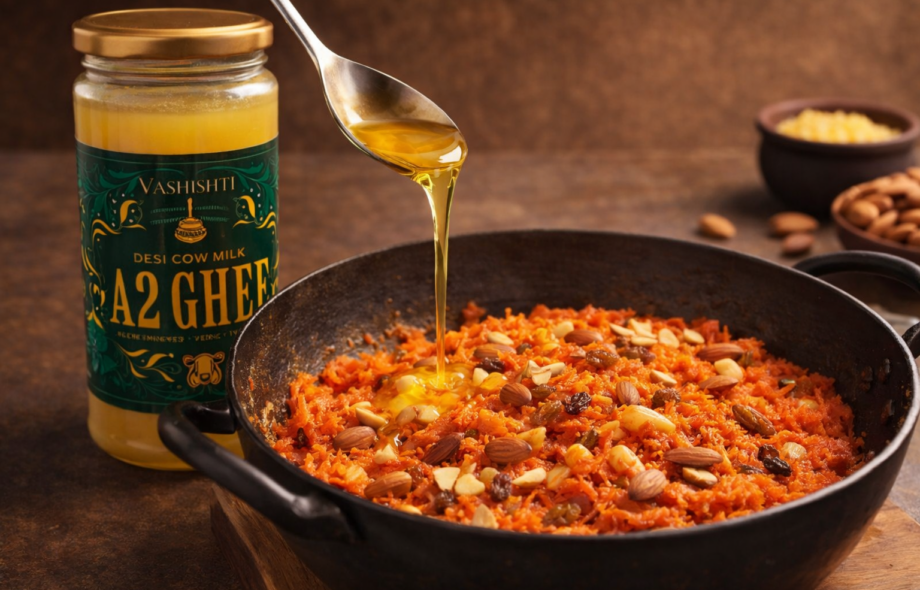
Another key ingredient is ghee, which enhances both flavor and texture. Many traditional recipes prefer using A2 cow ghee because it is made from the milk of indigenous cows and is valued for its natural preparation process.
Using quality ingredients can significantly improve the taste and nutritional value of homemade desserts.
Simple Gajar Halwa Recipe
Preparing gajar halwa at home is easy and requires only a few basic ingredients. Slow cooking is the key to achieving the authentic flavor and texture of this dish.
Ingredients
- 1 kg fresh carrots (grated)
- 1 liter full cream milk
- 3 tablespoons ghee
- ½ cup sugar or jaggery
- 10 almonds (chopped)
- 10 cashews
- 2 tablespoons raisins
- 4 green cardamom pods
Cooking Method
Start by washing and peeling the carrots. Grate them using a grater.
In a heavy-bottom pan, add grated carrots and milk. Cook on medium heat while stirring occasionally.
Allow the milk to slowly reduce as the carrots cook. This process helps develop the rich flavor of the halwa.
Once the mixture thickens, add ghee and sugar. Stir continuously to prevent sticking.
Next, add chopped almonds, cashews, raisins, and crushed cardamom. Continue cooking until the halwa becomes thick and aromatic.
Serve warm and garnish with additional nuts if desired.
Ayurvedic View of Seasonal Foods
Ayurveda emphasizes eating foods that align with the seasons. According to Ayurvedic principles, winter is a time when the body’s digestive power becomes stronger.
This allows people to enjoy slightly richer foods that provide warmth and energy.
Ingredients like ghee, nuts, and milk are often used in winter recipes because they help nourish the body and maintain balance during colder months.
Gajar halwa fits well into this seasonal approach to eating. It provides warmth and comfort while also delivering important nutrients.
However, moderation remains important. Even nutritious desserts should be consumed as part of a balanced diet.
Tips for Making Healthier Gajar Halwa
If you want to make a healthier version of this traditional dessert, consider these tips:
Use fresh seasonal carrots for better flavor and nutrients.
Reduce refined sugar or replace it with jaggery for a more natural sweetness.
Add more nuts and dry fruits to increase nutritional value.
Cook the halwa slowly to enhance its natural sweetness.
Choose natural ingredients whenever possible.
These small changes can help improve the overall nutritional quality of the dish.
Conclusion
Gajar halwa is more than just a dessert. It represents tradition, seasonal cooking, and the use of natural ingredients.
Prepared with carrots, milk, ghee, and nuts, this classic recipe highlights how simple foods can be both delicious and nourishing.
In today’s fast-paced world, many people are rediscovering traditional recipes as part of a healthier lifestyle.
By preparing dishes like gajar halwa at home, we can enjoy authentic flavors while also supporting mindful and nutritious eating habits.
This timeless dessert continues to bring warmth, comfort, and joy to countless families, especially during the winter season.
 :
https://in.pinterest.com/vashishtinaturalfoods/
:
https://in.pinterest.com/vashishtinaturalfoods/