

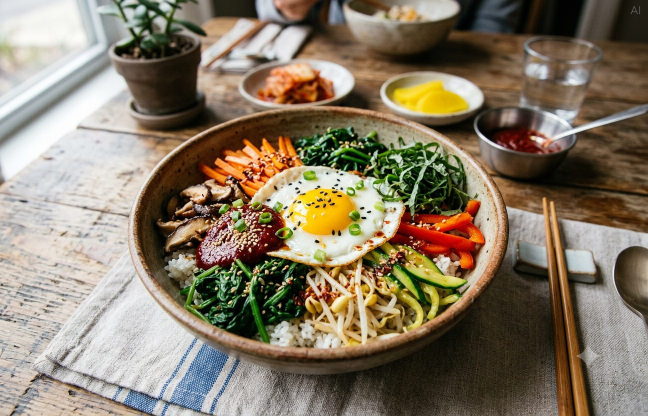
Bibimbap is a popular Korean dish that translates to “mixed rice” in English. It typically consists of a bed of rice topped with various vegetables, protein, and a spicy sauce. One of the most beloved variations of bibimbap is the veggie version, which is not only healthy but also bursting with flavor. In this blog post, we will explore how to make a Korean style veg bibimbap recipe that is sure to become a favorite in your household.
To start off, gather the following ingredients for the bibimbap: cooked rice, assorted vegetables (such as carrots, spinach, mushrooms, bean sprouts, and zucchini), tofu or tempeh for protein, gochujang (Korean chili paste), soy sauce, sesame oil, garlic, and a bit of sugar. The key to a good bibimbap lies in the variety of colorful and crunchy vegetables, so feel free to mix and match based on your preferences.
The first step is to prepare the vegetables by sautéing or blanching them separately. Carrots can be julienned and quickly stir-fried, while spinach can be blanched and seasoned with some garlic and sesame oil. Mushrooms are typically sautéed with soy sauce and a touch of sugar for a savory umami flavor. Zucchini can be thinly sliced and lightly cooked with a sprinkle of salt.
Next, prepare the protein component by marinating tofu or tempeh in a mixture of soy sauce, sesame oil, and garlic. The protein can be pan-fried until golden brown and crispy, adding a nice textural contrast to the dish.
Once all the components are ready, it’s time to assemble the bibimbap. Start by placing a generous portion of rice in a bowl, followed by the various vegetables and protein on top. Drizzle a spoonful of gochujang over the ingredients for a spicy kick, and mix everything together just before eating to distribute the flavors evenly.
Korean style veg bibimbap is not only delicious but also incredibly nutritious. The combination of whole grains from the rice, plant-based protein from tofu or tempeh, and an assortment of vitamins and minerals from the vegetables makes it a well-rounded meal. Plus, the gochujang sauce adds depth and heat to the dish, making it a truly satisfying and flavorful experience.
In conclusion, Korean style veg bibimbap is a must-try recipe for both vegetarians and meat-eaters alike. Its vibrant colors, bold flavors, and healthful ingredients make it a standout dish that is sure to impress. So why not give it a try and bring a taste of Korea into your own kitchen today?
- Simplify Sales. Maximize Profits. Run Your Business Smarter with Truffle POS.
 :
https://in.pinterest.com/trufflesystemsapac/
:
https://in.pinterest.com/trufflesystemsapac/