

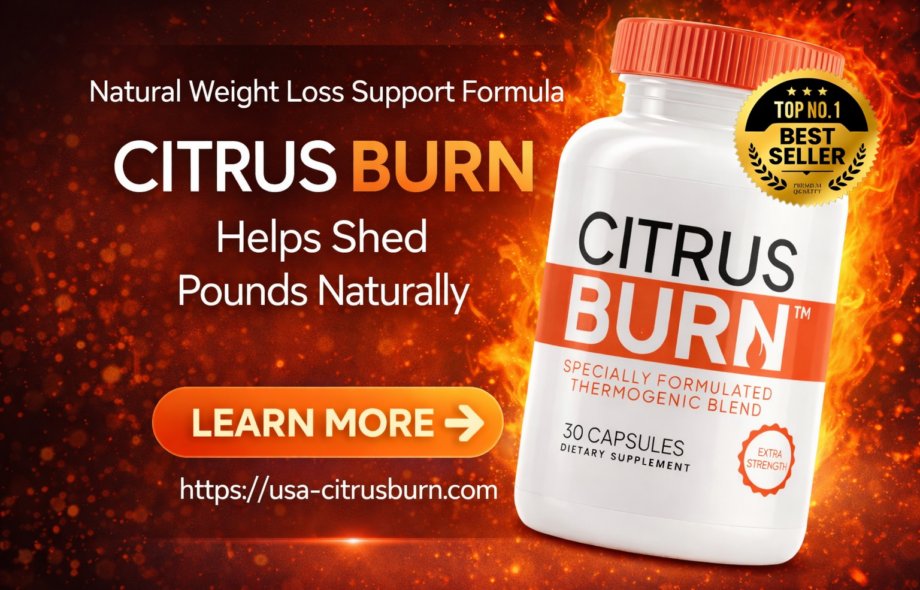
Whenever a new weight-support supplement gains attention, the same question starts circulating online: Is this real, or is it just another scam? Citrus Burn is no exception. Search engines, forums, and social platforms show people asking whether Citrus Burn truly works or whether it is simply clever marketing wrapped in attractive branding.
This article does not rush to label Citrus Burn as good or bad. Instead, it takes a careful, grounded approach—looking at what Citrus Burn claims, why scam allegations appear, what real users tend to experience, and how to judge the product realistically. The goal is not to sell or attack, but to help you think clearly before forming an opinion.
Why “Scam” Accusations Are So Common in Weight-Loss Supplements
Before focusing specifically on Citrus Burn, it’s important to understand why the word scam appears so often in the supplement space.
Weight management is emotional. People invest hope, money, and effort. When results don’t match expectations, disappointment quickly turns into anger. In many cases, “scam” does not mean fraud—it means “this didn’t work the way I expected.”
Other reasons scam claims spread include:
-
Unrealistic marketing expectations
-
Comparison with prescription drugs
-
Inconsistent lifestyle habits
-
Short trial periods
-
Misinformation shared online
This background matters, because it frames how Citrus Burn scam discussions usually begin.
What Is Citrus Burn?
Citrus Burn is a dietary supplement positioned as a metabolism and weight-support formula. It is commonly described as a product that supports fat utilization, energy balance, and appetite control when used alongside healthy habits.
It is not marketed as a medical treatment. It is not a prescription drug. It is a supplement intended to complement—not replace—diet, movement, and routine.
That distinction alone explains why many scam accusations are based on misunderstanding rather than deception.
What Citrus Burn Claims (And What It Does Not)
One of the most important steps in evaluating whether Citrus Burn is a scam is separating actual claims from assumed claims.
Citrus Burn generally positions itself as supporting:
-
Metabolic function
-
Energy balance
-
Fat utilization
-
Appetite awareness
It does not officially claim to:
-
Cure obesity
-
Melt fat overnight
-
Replace exercise
-
Treat medical conditions
When users expect instant or dramatic changes, disappointment is almost guaranteed.
Why People Call Citrus Burn a Scam
After reviewing common complaints and discussions, Citrus Burn scam claims usually fall into a few predictable categories.
1. “It Didn’t Work for Me”
This is the most common reason people label Citrus Burn a scam. Weight-loss results vary widely depending on:
-
Diet
-
Sleep
-
Stress
-
Hormones
-
Physical activity
-
Consistency
Two people can take the same supplement and have completely different experiences.
A lack of personal results does not automatically mean a product is fraudulent.
2. Expecting Drug-Like Results
Some buyers unconsciously compare supplements to prescription medications. That comparison is unfair and unrealistic.
Supplements work slowly, subtly, and inconsistently. Anyone expecting rapid body changes from Citrus Burn alone is likely to feel misled—even if the product did exactly what it was designed to do.
3. Short Usage Period
Many negative reviews come from people who stopped using Citrus Burn within 1–2 weeks.
Metabolic supplements typically require weeks, not days, to show any noticeable effect. Quitting early often leads to frustration and scam accusations.
4. Lifestyle Mismatch
Citrus Burn is often discussed as a supportive product. Users who continue high-calorie diets, sedentary routines, or irregular sleep often see little benefit.
Blaming the supplement while ignoring lifestyle factors is common—but misleading.
What Realistic Users Tend to Report
When reading more balanced Citrus Burn reviews, a different picture emerges.
Many users describe:
-
Subtle appetite awareness
-
More stable energy levels
-
Less snacking over time
-
Better motivation for movement
These changes are gradual, not dramatic. People who approach Citrus Burn patiently tend to report more neutral or positive experiences than those expecting fast transformations.
Understanding the Supplement Industry Reality
To judge whether Citrus Burn is a scam, you need to understand how supplements work legally.
In many countries, including the United States:
-
Supplements are not pre-approved by the FDA
-
They cannot claim to treat disease
-
Results are not guaranteed
-
Labels must include disclaimers
This regulatory structure means supplements operate in a support role, not a medical role.
Calling a supplement a scam simply because it didn’t perform like a drug misunderstands the entire category.
Ingredient Confusion and Scam Claims
Another source of scam accusations comes from misunderstanding ingredients.
Many people look up individual ingredients and conclude:
“This ingredient alone won’t cause weight loss, so the product must be fake.”
But supplements rely on combined, supportive effects, not single miracle compounds. No single natural ingredient melts fat in isolation.
Citrus Burn appears designed as a supportive blend rather than a one-ingredient solution, which aligns with how most legitimate supplements are formulated.
Pricing Complaints vs Scam Behavior
Some users complain about pricing and label Citrus Burn a scam because:
-
It costs more than expected
-
They didn’t read subscription terms carefully
-
Refund policies were misunderstood
These are valid customer service frustrations, but they are not the same as fraud.
A scam implies intentional deception. Poor communication or buyer oversight does not automatically qualify.
Refunds, Returns, and Customer Experience
One of the strongest indicators of whether a product is a scam is its refund structure.
Products that are true scams often:
-
Make refunds impossible
-
Hide contact details
-
Ignore customer communication
Citrus Burn complaints, where they exist, tend to focus on:
-
Delays
-
Process confusion
-
Expectation mismatch
These are common in legitimate e-commerce products—not proof of deception.
The Role of Marketing Language
Marketing language plays a huge role in scam accusations.
Phrases like “supports metabolism” or “helps fat utilization” can be interpreted emotionally rather than literally. When people read these phrases as promises instead of support statements, disappointment follows.
The problem is often interpretation, not intent.
Comparing Citrus Burn to Actual Scams
To put things in perspective, real supplement scams often show clear red flags:
-
No ingredient disclosure
-
Fake celebrity endorsements
-
Guaranteed results claims
-
No company contact info
-
Fake before-after images
Citrus Burn does not strongly fit these patterns.
That doesn’t mean it’s perfect—but it suggests scam claims are overstated.
Who Citrus Burn Is Probably NOT For
Understanding who should avoid a product is just as important as understanding who may benefit.
Citrus Burn may not be suitable for:
-
People expecting instant weight loss
-
Those unwilling to adjust diet or activity
-
Individuals sensitive to supplements
-
People seeking medical treatment
For these users, disappointment is likely—and scam accusations often follow.
Psychological Expectations and Weight-Loss Products
One overlooked factor in scam claims is psychology.
When people spend money on health products, they expect visible change. When change is subtle or slow, the brain interprets it as failure—even if internal improvements are happening.
This psychological gap fuels many negative reviews.
Is Citrus Burn Dangerous?
Another form of scam accusation is the assumption that the product is unsafe.
Most discussions do not show widespread reports of severe side effects. Mild reactions, when mentioned, are typical of many supplements and vary by individual.
Danger alone does not define a scam—but widespread harm would be a serious red flag. That pattern does not strongly appear here.
The Difference Between “Didn’t Work” and “Scam”
This distinction is critical.
-
“Didn’t work for me” = personal experience
-
“Scam” = intentional deception
Many online posts confuse the two.
A product can be ineffective for some people without being fraudulent.
How to Decide for Yourself (Smart Evaluation Checklist)
Instead of trusting extreme opinions, ask yourself:
-
Are my expectations realistic?
-
Am I willing to be consistent?
-
Do I understand what supplements can and cannot do?
-
Am I addressing lifestyle factors too?
Answering these honestly prevents regret and frustration.
Final Verdict: Citrus Burn Scam or Legit?
Based on a calm, realistic evaluation:
-
There is no clear evidence that Citrus Burn is an intentional scam
-
Most scam claims come from unmet expectations, not fraud
-
Results vary widely depending on lifestyle and consistency
-
The product appears to function as a supportive supplement, not a miracle solution
Citrus Burn is not magic. It is not instant. It is not guaranteed.
But disappointment alone does not equal deception.
Closing Thoughts
The supplement world is noisy. Strong opinions travel faster than balanced ones. The word scam is often used emotionally, not factually.
If you approach Citrus Burn—or any supplement—with patience, understanding, and realistic goals, you are far less likely to feel misled.
The real danger is not the product.
The real danger is unrealistic expectation.
 :
https://usa-citrusburn.com
:
https://usa-citrusburn.com